Tuesday, October 2, 2007
Tuesday, September 25, 2007
Ford Fiesta Ipod Connection No Sound
L ' nitrogen, which constitutes the 4 / 5 of the air is an inert gas, such as it is inhaled and exhaled. Only small quantities of melt in the plasma where it does not react. But if there is too strong a pressure as in deep-diving nitrogen combines with oxygen to form N2O which results in a state of intoxication and euphoria dangerous for divers. Welcome New Doctor To Practice
In normal humans can not store much oxygen in the body. Apnea of \u200b\u200bmore than a minute's duration therefore leads to a severe lack of oxygen in the bloodstream. Permanent brain damage can adverse after about three minutes and death within minutes after it inevitably follows if ventilation is not restored.
A person without training can not sustain voluntary apnea for more than one or two minutes. The reason for this is that the breathing rate and volume of each breath are tightly regulated to maintain constant values \u200b\u200bof tension of carbon dioxide (CO2) and pH of the blood.
In apnea, the CO2 is removed through the lungs and accumulates in the blood. The resulting growth of CO2 tension and the collapse of the pH resulting in stimulation of the respiratory centers of the brain, which can not be overcome voluntarily. However, tolerance to apnea may be exercised.
The ancient technique of immersion in apnea requires you to hold your breath and the best free-divers can indeed hold his breath underwater for more than eight minutes .
Many people have independently discovered that voluntary hyperventilation, performed before beginning voluntary apnea, can hold their breath longer. Some of them incorrectly attribute this effect to an increase of oxygen in the blood, not realizing that it is instead of a decrease in the rate of CO2 in the blood and lungs. The blood that leaves i polmoni è in normalità completamente saturato di ossigeno, quindi
l'iperventilazione non può aumentare la quantità di ossigeno disponibile.
Abbassare la concentrazione di CO2 aumenta invece il tempo che passa prima che i centri respiratori vengano stimolati. Questo errore ha portato alcuni ad usare l'iperventilazione come mezzo per aumentare il tempo di immersione, senza realizzare che c'è il pericolo che il corpo possa esaurire l'ossigeno mentre è sott'acqua, prima di sentire il bisogno di respirare, perdendo quindi improvvisamente conoscenza come risultato. Se una persona perde coscienza sott'acqua, ci sono considerevoli probabilità di morte per annegamento.
EMBOLISM
The air around us, however, is not only composed of O2 and CO2, but also contains other gases, more or less inert, which dissolve in the blood passively: the main nitrogen. The ability of blood to contain nitrogen varies with the pressure: this means that if the standard atmospheric pressure can dissolve a certain quantity, subjecting the entire body at a higher pressure (scuba diving) the blood is able to accept more; on the other hand, subjecting the body to a lower pressure (high altitude), it accepts less. The problem therefore arises in the face of abrupt changes in pressure drop, ie when rapidly reduces the blood's ability to maintain dissolved nitrogen. Consider the case of a Sub: at a depth of 20 m. His blood is able to contain a quantity of nitrogen was much higher (and as it enters the cylinders there is nitrogen in the blood), where the ascent is too fast your body does not have time to remove the excess nitrogen with breathing and, at the same time, the blood is no longer able to keep it dissolved. The result is that form of nitrogen gas bubbles in the circulation (embolism) that reach the heart and block the function of the pump (death from embolism). In free flight the differences in pressure are much more subtle (to have a problem would require a meteoric rise to around 7000 meters altitude ...) but the issue can become real for those who play both sports (diving, delta): you must wait at least 24 hours between last dive and flying in (high) share .
Can I Paint The Outside Of My Microwave
A 5000 m untrained individuals, natives at sea level, maintain about 70% of VO2 max measured in control conditions, native individuals at sea level, but not well-trained athletes develop only 55% of their VO2 max measured at sea level. In contrast, athletes who specialize in long term courses in high altitude natives usually at altitudes between 1500 and 3000 m, retain a higher percentage (76%). Surprisingly, Second-generation Tibetan born and brought up to 1300 m, 5000 m inclined to retain the highest percentage (85-90%), among all groups studied so far, their VO2 max. The latter subject, brought for the first time at 5000 m, shows other interesting features, some also found in Tibetans born and living permanently at about 4000 m. In general they are characterized by lower hemoglobin concentrations (g ~ 12%) than in Caucasians (~ 15 g%). At the peak of a comprehensive exercise, then they are characterized by high values \u200b\u200bof maximum heart rate (~ 180 beats per minute) (in Caucasians, the maximum heart rate is drastically reduced to 5000 m, up to 150-160 beats per minute) e di saturazione arteriosa in O2 (%SaO2 ~80%) (i Caucasici desaturano considerevolmente, da ~95% a 70-75%). Tutte queste osservazioni inducono a ritenere che Tibetani nati a bassa quota abbiano mantenuto alcune delle caratteristiche salienti dei loro antenati, favorevoli alla vita in condizioni di ipossia cronica.
I muscoli scheletrici di alpinisti Caucasici nativi a livello del mare acclimatati all’alta quota o esposti ripetutamente a gradi estremi di ipossia, nativi e residenti in alta quota, e giovani tibetani nati e vissuti a Kathmandu (1300 m) ma appartenenti a una popolazione esposta per migliaia anni a quote comprese tra 3000 e 4000 m sono tutti caratterizzati da una densità volumetrica mitocondriale significativamente lower than normally found in people native and resident at sea level. Since the mitochondrion is the organelle where intracellular redox reactions take place in the cellular respiratory chain, and where the O2 is "consumed" by acting as a terminal acceptor of electrons transported along the chain, we can assume a role of O2 same as a regulator of mitochondrial biogenesis.
The chronic shortage of O2, ie, could lead to a reduction of gene expression for enzymes and proteins responsible for oxidative phosphorylation. The Tibetan population has become such a reduction could be an acquired trait.
Hypoxia induces a chronic remodeling phenotype of the organism, which is the source of long-term adaptive responses. The molecular mechanisms underlying the adaptations to chronic hypoxia are poorly known. In each case the activation of specific genes is considered a mechanism by which hypoxia triggers long-term adaptive responses. In general, the genes activated by hypoxia fall into two categories: genes that are "induced" within minutes of exposure to hypoxia ("immediate early genes, IEGs) and genes activated more slowly, including the best known are the genes for erythropoietin (EPO), the endothelial growth factor vascolare (VEGF) ed il trasportatore 1 del glucosio (GLUT 1).
Studiando il sistema respiratorio, un gruppo di ricercatori dell'Università del Wisconsin di Madison ha identificato una proteina chiave, chiamata BDNF (fattore neurotrofico di derivazione cerebrale), e coinvolta nell'apprendimento, responsabile della capacità del corpo di mantenere una respirazione appropriata anche in condizioni difficili. La scoperta, pubblicata il 14 dicembre sulla rivista online "Nature Neuroscience", potrebbe fornire spunti per l'ideazione di nuovi farmaci, cure o metodi per prevenire disturbi potenzialmente letali come l'apnea del sonno, la sindrome della morte improvvisa del neonato e alcune lesioni legate al midollo spinale. Ogni pochi secondi, inhale and then release a breath of fresh air. If for any reason this procedure was prevented, for example, if oxygen levels are too low or if the airways were blocked, our bodies respond accordingly. In the case of oxygen deprivation, neurons in the brain cells send messages to the motor, ordering the muscles involved in breathing to work harder.
As a result, the person would be deeper breaths. If the fault is experienced on a regular breathing, the respiratory system remembers this and will respond more vigorously in the future. This change of behavior is called by scientists "plasticity Neural. In some cases, however, the respiratory system seems unable to remember past experiences. Gordon Mitchell, principal author of the study, says that patients who suffer from sleep apnea - a disorder in which breathing stops while you sleep - may have "memory" of inadequate breathing. To study the mechanism, the researchers exposed mice at intervals of three to five minutes of hypoxia, or a decrease of oxygen. By measuring the activity later in the phrenic nerve associated breathing, have found that the nerve had developed a memory of the lack of oxygen. To find out what caused this memory, the scientists analyzed segments of the spinal cord, the ricerca specifica di cambiamenti della proteina BDNF (fattore neurotrofico di derivazione cerebrale), che sostiene e addirittura stimola alcune funzioni neurali nel cervello. I risultati dimostrano che i periodi intermittenti di calo di ossigeno aumentano del 56% le concentrazioni di proteina BDNF nel nervo frenico. Scope Mouthwash Swallow
Carbossiemoglobina: composto che si forma all’interno del globulo rosso per unione della parte proteica dell’emoglobina con il monossido di carbonio (CO), quando questo gas si trova nell’aria respirata a una pressione parziale sufficiente per occupare sull’emoglobina il sito normalmente legato dall’ossigeno. Rispetto all’ossigeno il monossido di carbon has an affinity for hemoglobin 200-300 times higher. The carboxyhemoglobin is difficult to dissociate and is responsible for a severe form of hypoxia, anemic hypoxia that, which can cause polycythemia.
carboxyhemoglobin concentrations higher than 20% involve mild symptoms of intoxication, over 50% involve intoxication and coma can be fatal. Therefore, death occurs from asphyxia. The effect of CO is higher in altitude, the reduced percentage of oxygen in the air. In case of poisoning should immediately take the affected person to fresh air, for breathing oxygen enriched air helps eliminate of CO from carboxyhemoglobin. A concentration of CO in the air equal to 2000-4000 ppm (0.2% -0.4%) is fatal in about 15 minutes, after having caused loss of consciousness. In the presence of 1000 ppm survived about 90 minutes.
are The first symptoms of headache and feel dizzy, unfortunately, the gas also causes drowsiness, and this often prevents victims to warn of the danger and ventilate the room.
Hacker Pokemon Soul Silver
La respirazione periodica consiste in cicli di respirazione normal, which gradually slows down to a brief apnea that can last 10-15 seconds. May improve slightly with acclimatization but will not disappear until the shares down to "normal." This is not altitude sickness. Strong shocks occur in body chemistry and fluid balance during acclimatization. The center notes that the osmotic "concentration" of the blood resets its parameters with the result that the blood becomes more dense. This results in an altitude diuresis, the kidneys, which excrete a greater amount of liquid. The reasons for this are not yet fully understood but it results in a rise in hematocrit (concentration of red blood cells) e forse una maggiore capacità di trasporto dell’ossigeno e un’opposizione alla tendenza alla formazione dell’edema.
Mal di Montagna Acuto (Acute Mountain Sickness - AMS) caratterizzato da cefalea
e quando a seguito di una salita a quote superiori ai 2500 m
-perdita di appetito, nausea e/o vomito
-fatica e/o debolezza
-giramenti di testa e/o vertigini
-difficoltà nel sonno
Edema cerebrale d’Alta Quota (High Altitude Cerebral Edema - HACE)
All’estremo più pericoloso si trova l’Edema Cerebrale, in cui il cervello si gonfia e smette di funzionare a dovere. The salient feature of cerebral edema HARE is the change of thinking ability.
of High Altitude Pulmonary Edema - (High-Altitude Pulmonary Edema HAPE)
Another form of severe illness is high altitude pulmonary edema, or fluid in the lungs. Pulmonary edema is usually the second night after a climb and more frequent in young people and train.
An immediate descent is the solution.
The key to avoiding the Acute mountain sickness is a gradual climb that gives the body time to adjust. The acclimation time
variano da persona a persona e non è possibile dare regole assolute ma in generale.
Come evitare questi problemi?
- passare una notte almeno sotto i 3000 m
- oltre i 3000 metri non si dovrebbe salire di più di 500 m di dislivello al giorno
- L’acetazolamide (Diamox®) è un farmaco che forza i reni a secernere bicarbonato riacidificando il sangue.
Vengono così bilanciati gli effetti dell’iperventilazione che si innesca in alta quota nel tentativo di catturare più ossigeno. Questa reacidificazione agisce da stimolante respiratorio, specialmente di notte, riducendo o eliminando quella particolare respirazione periodica di cui abbiamo parlato prima. Pur essendo un valido supporto nella cura del Mal di Montagna Acuto il suo uso di elezione è preventivo in quanto il suo effetto principale è quello di accelerare l’acclimatazione.
Globe Theatre Template
Respirazione artificiale a pressione negativa:
Blood In Stool Missing Period
Sintomi: L'edema polmonare si manifesta frequentemente nelle ore notturne. L'infortunato si sveglia improvvisamente con enormi difficoltà di respirazione (dispnea), è agitato, si sente soffocare e chiede ossigeno. Il respiro è rumoroso, si ode un gorgoglio causato dalla presenza di liquido negli alveoli polmonari. Il paziente si mette seduto, per meglio respirare, non deve sdraiarsi, perché aumenta il senso di soffocamento. Il polso è debole. Il volto è solitamente pallido o cianotico; l'individuo è sudato e le estremità sono fredde.
Le difficoltà respiratorie insorgono soprattutto because the thin liquid film normally interposed between the two pleural layers is greatly increased in volume ( exudate) and thus limits the possibilities for expansion and lung ventilation.
care, based mainly antibiotics, should be addressed to the cause which gave rise to pleural inflammation.
Slogan Of Spice Jet Airlines
The most common allergies Allergy is an overreaction of the body against substances that most people are absolutely harmless. In practice, the immune system is activated when it should not: mistakes a harmless substance for a dangerous offender and that false trigger the alarm is "allergic reaction". The antigens responsible for allergic reaction are called allergens: they are in contact with all people, but some suffer from a predisposition to allergic diseases (often inherited) to produce immunoglobulin (IgE) antibodies specific to a particular allergen. Producing IgE, allergy is the body of "awareness". Perchél'allergia it occurs it is necessary that the target organ (nasal mucosa, conjunctival or bronchial as appropriate) appears particularly responsive. This exaggerated response capacity increases in those locations where there is an inflammation caused permanent, for example, recurrent viral infections respiratory or pollutants such as exhaust and cigarette smoke.
The main manifestations of respiratory allergy are: allergic rhinitis and allergic asthma.
allergic rhinitis
itchy nose, sneezing after another, watery eyes, difficulty breathing at times. Disorders that do not disappear in a few weeks but may persist throughout the year and worse depending on where you are located or of the seasons back in the same period, sometimes più intensi all'aria aperta, altre volte quando si è in casa. Anche se i sintomi all'apparenza sono simili, non si tratta del comune raffreddore ma di un disturbo noto comunemente come raffreddore da fieno, perché nella maggioranza dei casi è provocato dal polline delle piante e dei fiori. I medici lo definiscono rinite allergica per distinguerlo dalla rinite, che è il raffreddore comune. La rinite allergica consiste in un'infiammazione della mucosa del naso, non provocata però da virus e batteri, ma da sostanze inalate o ingerite, denominate allergeni.
Rainbow Puffle That Works
L'infiammazione della mucosa della faringe, o faringite, può essere is due to factors that irritating virus (rhinovirus, adenovirus, herpesvirus) and bacteria (the most common are: B-hemolytic streptococcus group A, Mycoplasma pneumoniae, Chlamydia pneumoniae). It is difficult to distinguish between bacterial and viral pharyngitis based only on physical examination. In both the pharyngeal mucosa may be highly flammable and can be covered by a membrane and a purulent exudate, liquid or viscous material that is characteristic of inflammatory processes. Depending on the course that takes the disease, may be acute or chronic pharyngitis.
Treatment: If sore throat is bacterial action is taken with antibiotics. Almost all viral forms resolve themselves within a few days: in this case there is no specific treatment.
Laryngitis Inflammation of the larynx that may be of bacterial or viral infection or even be caused by irritants or misuse of the voice. Those most affected are professionals who routinely use the item (for example, singers). A very specific situation of the croup or laryngitis and croup, also called spastic laryngitis, which affects only children under four years. Children can have a rather small larynx, or it can happen that the cartilage of the larynx is not sufficiently rigid and giving rise to a particularly breath noisy during feedings. Both idifetti will disappear with growth. The laryngitis may be acute or chronic.
bronchitis
Most contracts bronchitis due to viruses or bacteria transmitted from person to person through breathing. In winter, the windows are closed, it is easier for the air of the rooms is full of germs. In addition, excessive heating of the air dryer environments, making it harder for the body to maintain the necessary moisture to the mucous membranes play their protective role against the invasion of harmful substances. Bronchitis is a very common disease that can occur in acute or chronic.
Bronchite acuta e cronica La bronchite acuta di solito può essere la complicazione di un banale raffreddore o di un'influenza.
L'infezione è causata soprattutto da virus (del raffreddore e dell'influenza) ma anche da batteri. Possono favorirne l'insorgenza alcuni fattori di tipo ambientale, come l'inquinamento atmosferico, il fumo di sigaretta o il freddo intenso o anche alcune condizioni di vita sfavorevoli, come la malnutrizione e l'affaticamento eccessivo. A causa dell'infiammazione i bronchi si restringono o rimangono ostruiti, rendendo difficile il respiro e la circolazione del sangue nei polmoni. Il risultato è un ostacolo più o meno grave al passaggio dell'aria nei bronchi e nei polmoni.
Esami utili la broncoscopia to ascertain the exact nature of the disease (allows you to see directly the walls of the trachea and bronchi).
In the most severe forms of chronic bronchitis may also be affecting your heart (cardio-respiratory failure), so it is advisable to periodically an electrocardiogram.
Sore Throat A sore throat is a common symptom typical of autumn, when temperature inversions are frequent. This is a minor infection, which can create trouble if only lasts for a few days.
Most sore throats are due simply to environmental conditions, such as smog we breathe or the inhalation of vapors and nuisance dust. Cigarette smoking is another important cause of throat irritation. Other risk factors may be too hot food or drinks, the air too dry or, conversely, too humid. Other times, the sore throat is due to attack by viruses and bacteria organs most affected by the symptoms of sore throat may be, in fact, pharynx, larynx, tonsils, vocal cords and lymph nodes.
Tonsillitis Tonsillitis is particularly common in cold weather and can take on the trend of a real epidemic. It is transmitted in crowded places through sneezing, coughing, saliva. Viral infections are resolved within a few giorni e non danno complicazioni. Anche le tonsilliti di origine batterica non destano preoccupazioni: se però sono causate da un batterio chiamato streptococco, in casi molto rari, danno complicazioni gravi, come la glomerulonefrite, un'infiammazione che, se non viene curata appropriatamente, può causare danni permanenti ai reni.
La tosse
E’ un violento atto espiratorio a glottide chiusa. La brusca contrazione dei muscoli espiratori e della parete addominale provoca un brusco aumento delle pressione tracheale con successiva apertura delle glottide e violenta fuoriuscita di aria dai polmoni. Il caratteristico rumore è provocato dalla vibrazione delle corde vocali.
In ogni caso la tosse non è una disease but a symptom: shoot every time something irritates the mucous membranes of the throat, trachea or bronchi, the channels that carry air to the lungs. It is a spontaneous response of the body defends itself from irritants such as dust and smoke, viruses or bacteria, that block the normal flow of air preventing breathing. The brain sends immediately to the muscles of the chest and stomach order contract. So the body can clear the airways.
Saturday, September 22, 2007
Tyffany Towers In Shower
I immediately used my new on Wetpaint site to upload files.
(well ...)
This file laboratory respiration and ginnastica.ppt "(Powerpoint Presentation - 737k) sarà utilizzato dalla docente di educazione fisica in una delle prossime lezioni.
► scaricabile dalla pagina Archivio laboratori
White Particles In Light Yellow Urine
Stamattina ho visitato il sito WetPaint .
Ho trovato questo sito interessante con una breve ricerca "biology education".
Ho inserito wetpaint nel nostro deliciuos ... secondo me ci potrà essere utile in futuro...
Wetpaint powers websites that tap the power of collaborative thinking. The heart of the Wetpaint advantage is its ability to allow anyone — especially those without technical skill — to create and contribute to websites written for and by Those who share a passion or interest. ...... With Wetpaint, anyone with a passion can create an Entirely new website and invite others to help build it Them. And it's easy - adding to a Wetpaint site is as simple as click and type. [From About Wetpaint ]
When I have more time, calmly, I want to expand and fix the page. (☺ ☺ ☺)
... I plan to use it as a repository for various laboratory exercises and as a binder for all protocols of interest to the practical experience of science ... !
page of Wetpaint is easy to use, and I can easily upload documents how the various protocols for laboratory exercises.
Excuse the interruption ... go ahead with your research ... good job.
Over The Toilet Space Saver
Sciences Research: respiratory movement and ventilation
The normal oxygen consumption is about 250ml/minuto adult human at rest. Both the ventilation lung, the oxygen consumption , increase up to 20 times during exercise of maximum intensity. During this type of activity, the pulmonary ventilation is about 100/110 liters per minute, with only 50% lower than the maximal respiratory capacity (150 / 170 liters per minute). The superiority of maximum breathing capacity, allows you to undertake sporting activities in difficult situations (in altitude, in hot and in case of respiratory disorders). The uptake of oxygen in the lungs in cases of maximal aerobic metabolism (VO2max), tends to improve with the training of about il 10%, ma arrivando ad essere superiore alla norma di anche il 45% nei maratoneti. Anche la capacità di diffusione dell’ossigeno dagli alveoli al circolo ematico migliora con la pratica sportiva, passando dai 23 ml/min di un sedentario a riposo, agli 80 ml/min di un canottiere in attività massimale (situazione in cui tutti i capillari polmonari sono perfusi al massimo). Anche durante un’intensa attività fisica, il sistema respiratorio è in grado di fronteggiare le variazioni della pressione di ossigeno e anidride carbonica nel sangue, mantenendole a livelli normali nonostante la tendenza della prima ad abbassarsi in favore della seconda. Non a caso, nell’attività fisica, la stimolazione all’incremento della respiration is not due to changes in gas pressure, but by neurogenic mechanisms. Friday, September 21, 2007
Sims 2 How To Make A Campus
Regarding the chemical control, it is governed by the rate of carbon dioxide presente nel sangue: se c'è troppa anidride carbonica i recettori trasmettono l'impulso di respirare in modo che il tasso di anidride carbonica non superi mai certi livelli. Questi chemiorecettori percepiscono il tasso di anidride carbonica attraverso l'acidità del sangue. Quando c'è molta anidride carbonica sotto forma di acido carbonico il sangue diventa acido, tale variazione viene recepita e quindi annullata tramite l'aumento del ritmo respiratorio.
In questo modo i polmoni a questo notevole importanza nella regolazione del pH nel sangue e nei tessuti.
Eml Series E100 Replacement
I cambiamenti delle dimensioni della cavità toracica influiscono sulla pressione gas inside the lungs when the chest cavity increases the pressure inside the chest decreases and this decrease in pressure makes you suck air in from the outside, which is at a higher pressure. When the thoracic cavity decreases, the internal pressure becomes greater than atmospheric pressure and the gas is expelled from the respiratory tract.
lung capacity: The lung capacity is approximately 5000 cc That is, 5 liters distributed as follows:
- 500 cc air introduced via inhalation normal
- 1500 cc can be introduced with forced inspiration;
- 1500 cc are expelled with forced expiration;
- 1500 cc air remains in the lungs (air discharge).
Thursday, September 20, 2007
Nys Dmv Sales Invoice
metabolic exchanges take place at the walls of the pulmonary alveoli consist of cells covered by a thin veil fluid and the blood is separated by two thin layers of cells: dell'alveolo the wall and the endothelium of the capillary.
Oxygen is poorly soluble in water to which 98% of the oxygen carried by the blood stream is bound to hemoglobin.
CO2 + H2O H2CO3 ----»
This breaks down into H + ions and bicarbonate ions HCO3-So in the end is 9% in physical solution in plasma and 64% are present in plasma and red blood cell cytosol under form of bicarbonate ion, 27% is bound to hemoglobin in the form of carbodiossiemoglobina. In the lungs the carbon dioxide bound to hemoglobin is dissociated from it and diffuses into the alveoli together with that dissolved in the plasma in the form of carbonic acid is released by the action of the enzyme carbonic anhydrase that catalyzes the reaction: H2CO3
----» CO2 + H2O
Nitrogen, present for 4 / 5 in the air, an inert gas that does not react with hemoglobin: is inhaled and exhaled as such, only in small quantity is dissolved in plasma, where, however, does not no reaction.
Ambulance Billing Rfps
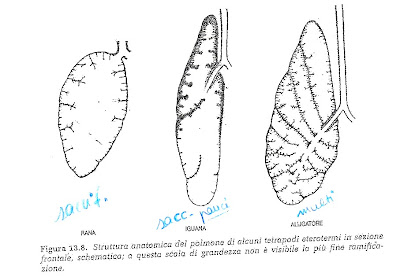
Amphibians
in amphibians are
- lung-shaped lot, which is a large central cavity wall smooth.
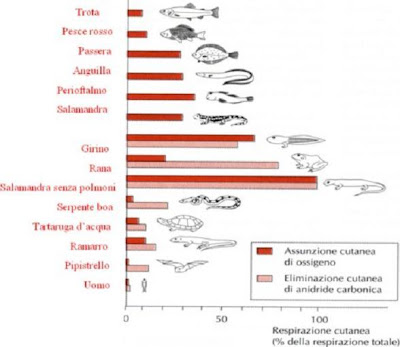
- important is breathing through the skin, thin skin and lots of wet capillaries.
Some amphibians have only breathing skin for example, the adult frog can live a long shadow, without using the lungs, but dies if the air has painted the skin.
Reptiles
In reptiles are saccular lung parenchymal as well.
lungs have parenchymatous septa that divide many rooms in the central cavity, a lung is compressible and behaves like rubber to the touch-down.
These septa are developed enough to invade the entire cavity to form the parenchyma.
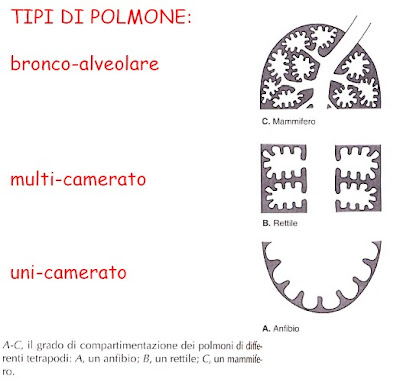
During the evolution of different classes of vertebrates we note that the lungs begin to divide internally into many small rooms and begin to take on a spongy appearance (like that of mammals).
The exchange surface is much greater than in amphibians (saccular lungs) and pulmonary breathing is more efficient.
The lungs of tetrapods.
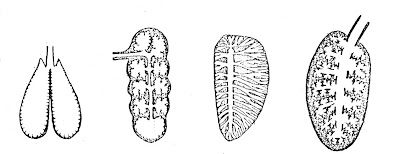
Figure: the class of vertebrate lungs (lung of amphibians, reptiles, birds and mammals).
- amphibians with short saccular bronchi and a few creases.
- reptiles are formed by folds and bronchi penetrate.
- mammalian parenchymal structures formed by the violent and took a bronchial tree, which enters the lungs, the presence of the diaphragm
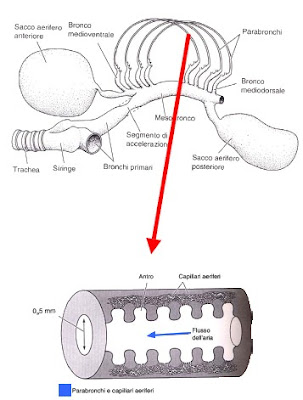
- birds small lungs and the presence of inelastic aeriferi bags.
How To Drain The Pus From My Finger
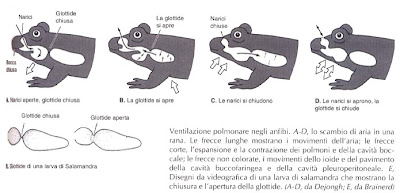
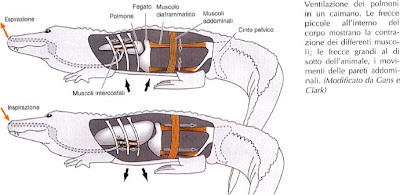
Come respirare se il torace è chiuso in una struttura rigida? Nei cheloni le costole sono inglobate nel carapace . Come avviene la ventilazione polmonare?
- nel cheloni acquatici il polmone è unito ai visceri con dei legamenti, i movimenti dei visceri espandono il polmone rendendo possibile la ventilazione.
- nel cheloni terrestri un muscolo unisce il polmone al cinto toracico e pelvico, il movimento dei cinti si trasmette ai polmoni. (...praticamente respira e cammina, cammina e respira....)
- inoltre è persente la ventilazione tramite i movimenti della cavità boccale . Come avviene nelle rane. I movimenti del capo orale e faringeo i movimenti di deglutizione portano aria ai polmoni.