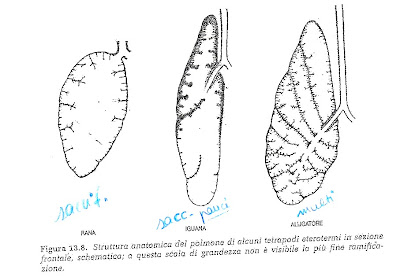
in amphibians are
- lung-shaped lot, which is a large central cavity wall smooth.
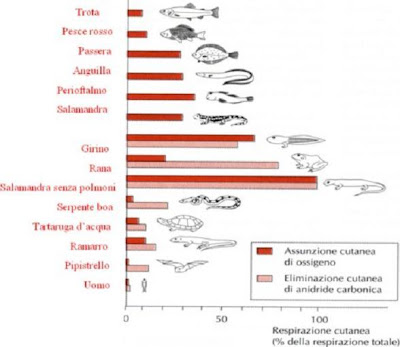
- important is breathing through the skin, thin skin and lots of wet capillaries.
Some amphibians have only breathing skin for example, the adult frog can live a long shadow, without using the lungs, but dies if the air has painted the skin.
Reptiles
In reptiles are saccular lung parenchymal as well.
lungs have parenchymatous septa that divide many rooms in the central cavity, a lung is compressible and behaves like rubber to the touch-down.
These septa are developed enough to invade the entire cavity to form the parenchyma.
During the evolution of different classes of vertebrates we note that the lungs begin to divide internally into many small rooms and begin to take on a spongy appearance (like that of mammals).
The exchange surface is much greater than in amphibians (saccular lungs) and pulmonary breathing is more efficient.
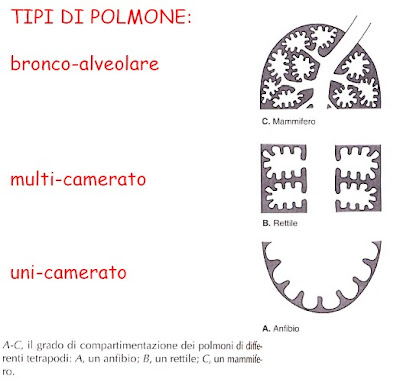
The lungs of tetrapods.
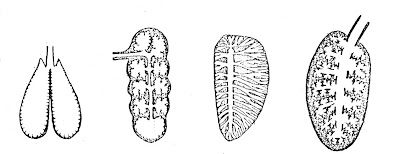
Figure: the class of vertebrate lungs (lung of amphibians, reptiles, birds and mammals).
- amphibians with short saccular bronchi and a few creases.
- reptiles are formed by folds and bronchi penetrate.
- mammalian parenchymal structures formed by the violent and took a bronchial tree, which enters the lungs, the presence of the diaphragm
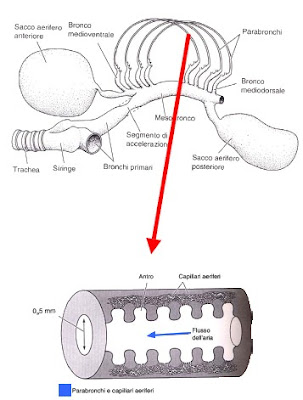
- birds small lungs and the presence of inelastic aeriferi bags.


0 comments:
Post a Comment